
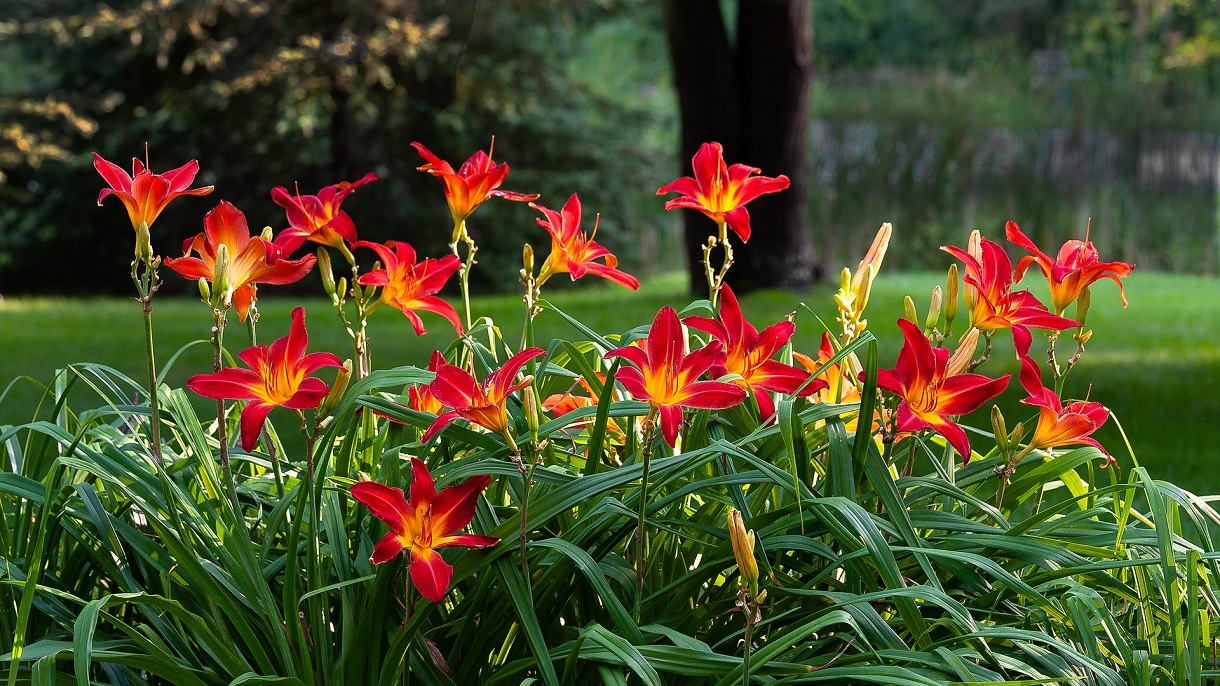
Daylilies have moved well beyond their reputation as short-lived bursts of orange along country verges. Modern breeding has produced cultivars capable of flowering for weeks on end, with repeat flushes that carry borders from early summer into early autumn. For gardeners who want reliable colour without the constant replanting of annuals, long-flowering daylilies offer a practical solution. They are hardy, tolerant of mixed British weather, and adaptable enough to sit comfortably among roses, fruit trees and herbaceous perennials.
Breeding for Duration: What Makes a Daylily Long-Flowering?
The botanical name Hemerocallis translates as “beauty for a day”, referring to the fact that each individual bloom lasts just one day. Long-flowering varieties overcome this limitation not by extending the life of a single flower, but by producing an abundance of buds on well-branched scapes. Modern hybrids may carry 20 to 40 buds per stem, opening sequentially over several weeks. Reblooming types then send up additional scapes later in the season, particularly if deadheaded and kept well watered.
Breeders have focused on several traits to achieve this. High bud count, strong branching, and a capacity for repeat scapes are central. Equally important is foliage health; plants with clean, arching leaves continue photosynthesising efficiently, fuelling further blooms. In the British climate, resistance to rot in wet summers and tolerance of dry spells are also significant.
A representative from the specialist grower SwallowtailDaylilies advises that gardeners seeking dependable summer colour should prioritise reblooming cultivars with proven UK performance. They note that selecting established, field-grown divisions rather than freshly potted imports often results in stronger first-year displays. Their guidance on choosing reblooming daylilies emphasises matching cultivars to site conditions, particularly sun exposure and soil drainage, to maximise flowering duration.
Interest in daylily plants for sale has increased in recent years as gardeners look for perennials that combine durability with a long display period. The following eight cultivars have been selected specifically for their extended flowering season and their consistent performance in UK gardens. Each has been bred to open numerous buds over many weeks, often with reblooming tendencies that prolong their contribution well beyond the typical mid-summer peak.
Long-flowering daylilies generally prefer full sun for at least six hours a day, though many will tolerate light shade. In heavier soils, incorporating organic matter improves drainage and root development. Once established, they require minimal intervention beyond occasional feeding and the removal of spent scapes. This combination of breeding and straightforward care underpins the consistent colour these cultivars can provide.
Early to Mid-Summer Reliability: The First Wave
The first group of long-flowering daylilies begins its display in early to mid-summer and maintains momentum through July.
‘Stella de Oro’ remains one of the best-known rebloomers. Compact, with golden-yellow flowers held just above neat foliage, it begins flowering in June and often continues until September. Its strength lies in sheer persistence; while individual blooms are modest in size, the plant produces them in steady succession. It is particularly effective at the front of borders or edging vegetable plots and fruit tree guilds, where its tidy habit prevents overcrowding.
‘Happy Returns’, a close relative in appearance, offers lemon-yellow blooms with a slightly softer tone. It is valued for its ability to perform in less-than-ideal soils and for its willingness to rebloom even in cooler summers. In mixed borders, it pairs well with blue salvias and early-flowering roses, filling gaps as spring perennials fade.
For gardeners seeking richer colour early in the season, ‘Catherine Woodbury’ provides lavender-pink flowers with a pale throat and a gentle fragrance. Though not as compact as the previous two, it produces a generous succession of buds over several weeks. In warmer parts of the UK, it may produce a secondary flush in late summer. Its taller stems allow it to weave through shrub plantings, including around espaliered apple trees where airflow remains good.
These early to mid-season cultivars establish the backbone of summer colour. By combining at least two with differing heights and shades, gardeners can create layered planting schemes that remain active while later varieties prepare to take over.
High Summer Impact: Bold Colour and Strong Scapes
As July moves into August, larger-flowered cultivars come into their own. Breeding advances have produced daylilies with substantial blooms and strong stems capable of withstanding wind and rain.
‘Chicago Apache’ is a striking example, with deep red petals and a contrasting green throat. It flowers over an extended mid-season period and is known for its durability. The colour holds well even in strong sunlight, avoiding the bleaching that affects some reds. When planted in groups of three or five, it provides a solid block of colour that anchors mixed herbaceous borders.
‘Bela Lugosi’ offers near-black purple blooms with a lime-green throat, creating dramatic contrast. Its high bud count ensures several weeks of display, and in favourable conditions it may produce a second flush. This cultivar works particularly well against pale gravel or light-coloured walls, where its depth of tone is accentuated.
For gardeners browsing Daylily plants for sale with an eye for bold patterns, ‘Strawberry Candy’ remains a reliable mid-season choice. Pink petals marked with a darker eye zone and ruffled edges create visual interest even from a distance. It is a strong rebloomer in much of the UK, especially when deadheaded promptly and given a balanced feed after its first flush.
These mid-summer cultivars benefit from consistent moisture during dry spells. While established daylilies are relatively drought tolerant, extended dryness can reduce bud development. A mulch of composted bark or well-rotted manure in late spring helps conserve moisture and supports the sustained flowering these varieties are bred to deliver.
Late Summer Continuity: Extending the Season
Maintaining colour into late August and September requires cultivars specifically selected for late or repeat flowering. The following three varieties excel at bridging the gap between high summer and early autumn.
‘Autumn Red’ is valued for its ability to produce a strong late flush. The crimson-red blooms appear on sturdy stems and continue well after many other perennials have begun to fade. In milder regions, it may flower intermittently until the first frosts. Its upright habit makes it suitable for the middle of borders, where it can rise above lower-growing companions.
‘Pardon Me’ is a compact, wine-red cultivar with a yellow throat and a pronounced reblooming habit. It performs reliably in containers, provided they are large enough to accommodate its root system and are kept well watered. This makes it a practical option for patios or small gardens where ground space is limited but sustained colour is still desired.
‘Elizabeth Salter’ offers soft apricot blooms with a sweet fragrance and an extended flowering period. Its colour blends easily with late-summer grasses and rudbeckias. In mixed orchard plantings, it can soften the base of trained fruit trees while continuing to flower as apples begin to ripen.
By incorporating at least one late-flowering or strongly reblooming variety, gardeners can avoid the abrupt drop-off in colour that sometimes occurs after peak summer. This approach also supports pollinators, as daylilies provide accessible pollen during periods when other sources may be declining.
Integrating Long-Flowering Daylilies into Productive Gardens
Daylilies are not confined to ornamental borders. Their adaptability makes them suitable companions for fruit trees and kitchen gardens. Their fibrous root systems are relatively non-invasive, allowing them to coexist with shallow-rooted crops without excessive competition.
Planted at the drip line of apple or pear trees, daylilies can suppress weeds and provide an attractive understorey. Their foliage helps shade the soil, reducing evaporation. Because they die back cleanly in winter, they do not interfere with seasonal pruning or harvesting tasks. In wildlife-friendly gardens, their flowers attract hoverflies and bees, contributing indirectly to pollination.
When selecting cultivars, height and colour should complement the surrounding planting scheme. Taller varieties such as ‘Bela Lugosi’ or ‘Catherine Woodbury’ can be positioned toward the rear of a border or among espalier supports, while compact types like ‘Stella de Oro’ and ‘Pardon Me’ suit edging roles. Mixing early, mid and late-season bloomers ensures continuity.
Gardeners evaluating Daylily plants for sale should also consider foliage type. Dormant varieties die back completely in winter, which can be beneficial in colder regions. Semi-evergreen types retain some foliage in milder areas, providing structure but sometimes requiring tidying in spring. Matching foliage habit to local climate contributes to overall plant health and sustained flowering performance.
Maintenance for Maximum Bloom: Practical Considerations
Long-flowering daylilies are not demanding, but certain practices enhance their performance. Planting depth is important; crowns should sit just below soil level, with roots spread out and covered firmly. Planting too deeply can reduce flowering, while shallow planting may expose roots to frost.
Feeding should be moderate rather than excessive. A balanced, slow-release fertiliser in spring supports bud formation without encouraging overly lush foliage at the expense of blooms. After the first major flush, a light feed can stimulate reblooming cultivars to produce additional scapes.
Deadheading is simple yet effective. Removing spent flowers prevents seed formation, allowing the plant to redirect energy into further buds. Once an entire scape has finished, cutting it back to the base tidies the plant and encourages new growth. Dividing clumps every four to five years maintains vigour; overcrowded plants often show reduced flowering.
Pest and disease issues are generally limited in the UK, though slugs may damage emerging shoots in spring. Good air circulation reduces the risk of fungal problems during wet summers. By following these straightforward steps, gardeners can ensure that the extended flowering potential bred into these cultivars is fully realised.
Long-flowering daylilies represent a practical investment in sustained summer colour. Through careful selection of early, mid and late-season varieties, and by matching plants to site conditions, gardeners can create borders that remain active for months. Whether integrated into ornamental beds or planted among fruit trees, these eight cultivars demonstrate how modern breeding has transformed a once-brief bloom into a reliable, season-long display.
