
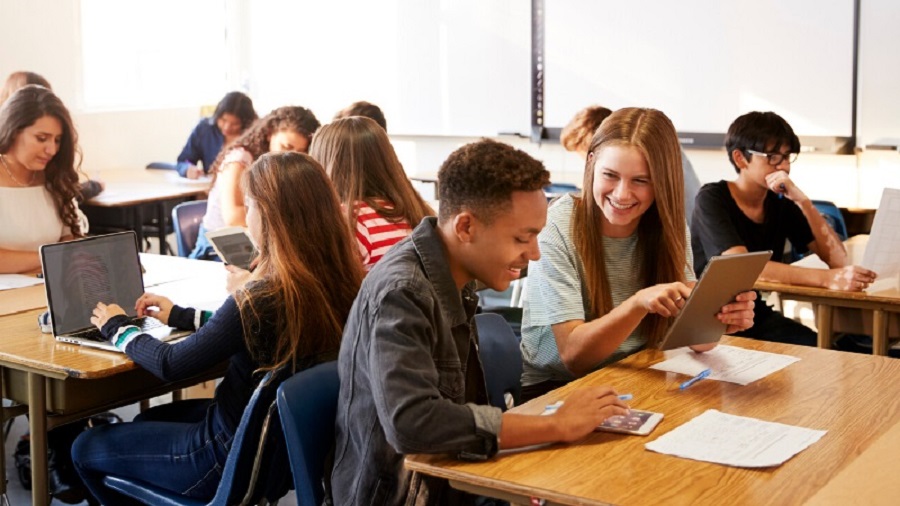
The world students are preparing for looks very different from the one their textbooks were written for. Automation, artificial intelligence, remote work, and global collaboration are reshaping careers at a rapid pace. To thrive in this environment, students need more than academic knowledge — they need future-ready skills that help them adapt, think critically, and stay relevant throughout their lives.
What Are Future-Ready Skills?
Future-ready skills are a mix of technical abilities, cognitive strengths, and human-centered qualities that enable students to succeed in fast-changing personal and professional landscapes. These skills are not tied to a single job or industry. Instead, they empower learners to grow, pivot, and lead in uncertainty.
Critical Thinking and Problem-Solving
In a world overflowing with information, the ability to analyze, evaluate, and make sound decisions is essential.
Students must learn how to:
-
Question assumptions and identify biases
-
Break down complex problems into manageable parts
-
Evaluate evidence before forming conclusions
-
Apply logic creatively to real-world challenges
Critical thinking helps students move beyond memorization and become independent thinkers.
Digital Literacy and Technology Fluency
Technology is no longer optional — it is foundational. Future-ready students understand not just how to use tools, but why and when to use them responsibly.
Key areas include:
-
Understanding digital platforms and productivity tools
-
Basic knowledge of data, coding, or automation concepts
-
Cybersecurity awareness and online safety
-
Ethical and responsible use of technology
Digital fluency allows students to stay confident as tools and systems evolve.
Communication and Collaboration Skills
Even the most technical roles require strong human interaction. Clear communication builds trust, alignment, and impact.
Students should develop:
-
Written communication for clarity and persuasion
-
Verbal communication for presentations and discussions
-
Active listening to understand diverse viewpoints
-
Team collaboration across cultures and time zones
These skills are especially critical in remote and hybrid work environments.
Creativity and Innovation
Routine tasks are increasingly automated, making creative thinking a powerful differentiator. Creativity is not limited to the arts — it applies to problem-solving, design, and strategy.
Creative students are able to:
-
Generate original ideas
-
Approach challenges from new perspectives
-
Experiment without fear of failure
-
Innovate within constraints
Innovation begins where curiosity meets courage.
Emotional Intelligence and Self-Awareness
Success is deeply connected to how students understand and manage emotions — their own and others’.
Emotional intelligence includes:
-
Self-awareness and self-regulation
-
Empathy and interpersonal sensitivity
-
Conflict resolution skills
-
Resilience under pressure
Students with high emotional intelligence navigate change with confidence and maturity.
Adaptability and Lifelong Learning
Career paths are no longer linear. Students must be prepared to learn, unlearn, and relearn continuously.
Adaptable learners:
-
Embrace change instead of resisting it
-
Seek feedback and self-improvement
-
Learn new skills independently
-
Stay curious as industries evolve
The ability to learn fast is often more valuable than what is already known.
Financial and Entrepreneurial Literacy
Understanding money, value creation, and decision-making equips students for independence.
Essential concepts include:
-
Budgeting and personal finance basics
-
Understanding risk and reward
-
Entrepreneurial mindset and initiative
-
Problem-solving through value creation
These skills support smarter life and career choices.
Leadership and Responsibility
Leadership is not about titles — it is about influence and accountability.
Students benefit from learning:
-
Decision-making with integrity
-
Accountability for actions and outcomes
-
Initiative and ownership
-
Ethical reasoning and social responsibility
Strong leadership skills prepare students to contribute positively to teams and communities.
Why These Skills Matter More Than Ever
Academic success alone no longer guarantees career readiness. Employers and institutions increasingly value how students think, adapt, and collaborate. Future-ready skills ensure students are not just employable, but resilient and fulfilled in an unpredictable world.
How Students Can Start Building Future-Ready Skills Today
Practical steps include:
-
Participating in group projects and discussions
-
Exploring online learning beyond formal curricula
-
Practicing reflection and self-assessment
-
Engaging in real-world problem-solving activities
-
Seeking mentors and diverse perspectives
Small, consistent efforts create long-term impact.
Frequently Asked Questions
What is the difference between traditional skills and future-ready skills?
Traditional skills focus on subject knowledge, while future-ready skills emphasize adaptability, critical thinking, and real-world application across changing environments.
Can future-ready skills be learned outside the classroom?
Yes. Many of these skills develop through extracurricular activities, internships, online learning, volunteering, and personal projects.
Are future-ready skills relevant for all career paths?
Absolutely. Whether in technology, healthcare, business, or creative fields, these skills support success across industries.
How early should students start developing these skills?
The earlier, the better. However, it is never too late — these skills can be developed at any stage of education.
How can educators support future-ready learning?
By encouraging inquiry-based learning, collaboration, real-world problem-solving, and reflective thinking rather than rote memorization.
Do future-ready skills replace academic learning?
No. They complement academic knowledge and make it more applicable, meaningful, and impactful.
How can students measure progress in future-ready skills?
Through self-reflection, feedback from peers and mentors, real-world outcomes, and the ability to adapt to new challenges effectively.
